HR or Heart Rate is our pulse and is measured in BPM units – beats per minute - how many beats our heart beats in one minute.
Checking your heart rate at rest, during exercise, or after energetic exercise can give you important information about your overall fitness level. Your heart rate is changing based on physical activity. If you check your heart rate when you just wake up in the morning, it will beat in its lowest rate. This is called a Resting pulse or Resting HR.
According to the National Institute of Health, the average resting heart rate is 60 - 100 beats per minute (well-trained athletes HR is 40 - 60 BPM). Spivi allows you to see your heart rate performance over time (last 30 days, last 90 days, last 180 days, and last year) in the My Workouts section of spivi.com, under Trends.
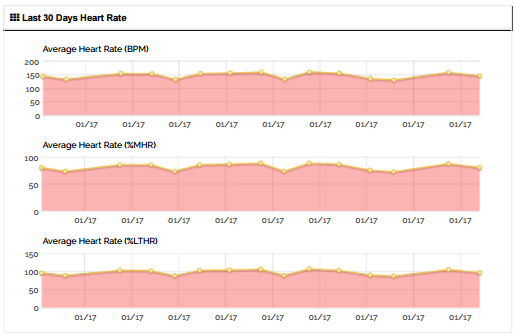
Why do we measure our HR during a workout?
First, we want to make sure that our workout if efficient. We don't want to exercise too hard or not hard enough. Second, it can help set personal goals during a workout. The workout goals are set in % of each member's Maximum Heart Rate and enable members to exercise based on their own abilities.
Max HR: Max HR is the maximum rate your heart can beat per minute. The standard formula to estimate Max HR is 220 – age. However, to achieve a more accurate Max HR value, you should conduct a Max HR test.
Target Heart Rate or Training Heart Rate (THR): During workout we should aim to our Target Heart Rate for efficient workout, meaning, to enable the heart and lungs to receive the most benefit of it.
To check our THR during a workout, we need to count our pulse for 10 seconds while exercising, and multiply by 6 to find the Beat Per Minute (BPM). The THR should be between 65%-88% of the Max HR.
Keep in mind that everyone is different, and you need to be aware of how you feel during the workout and how hard you work. LTHR Lactate Threshold Heart Rate (LTHR) is the maximum average heart rate that one can sustain during a 60-minute time trial. During this test member should aim to their highest possible heart rate.
Comments
0 comments
Article is closed for comments.